Bit-perfect playback
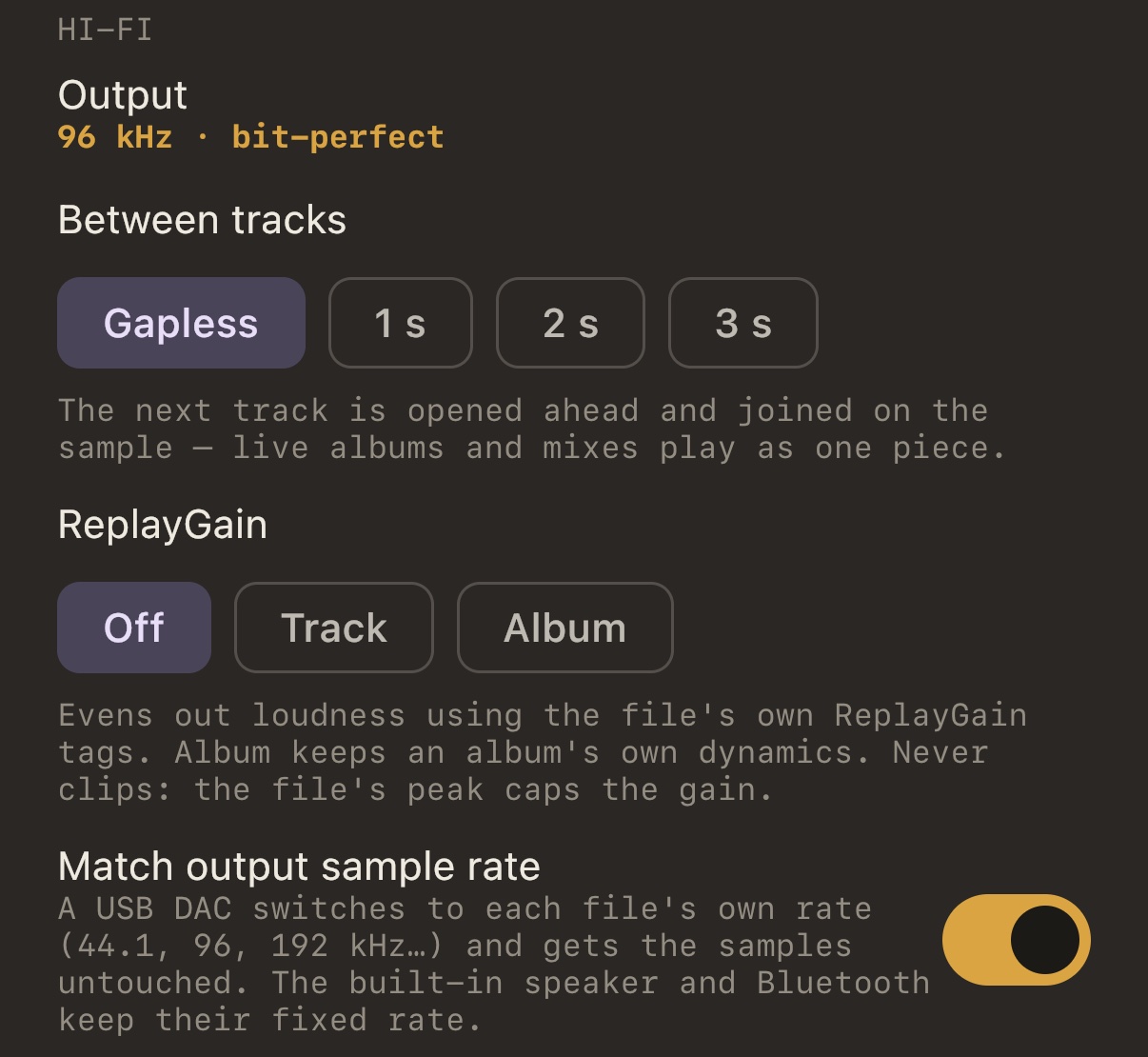
Most players say “bit-perfect” in the description and leave you to guess. MP95 shows it: one line in the Hi-Fi settings reads the state of the path twice a second.
Learn moreHi-Fi
Under the cassette decks and turntables is a path an audiophile can check: 32-bit float from decoder to output, the DAC following each file’s rate, gapless joins on the sample, ReplayGain that never clips, bs2b crossfeed, DSD and 35+ codecs. And a line that tells you, live, whether it is bit-perfect.
All Hi-Fi features are free · iPhone · Android · Mac
| iPhone & iPad | Android | Mac | |
|---|---|---|---|
| Decoding | Apple decoders for MP3, AAC, ALAC, FLAC, WAV, AIFF and CAF; FFmpeg 7.1 for everything else | Media3 (ExoPlayer) for MP3, AAC, FLAC, WAV, Ogg and Opus; FFmpeg 7.1 for everything else, AIFF and CAF included | FFmpeg 7.1 for every format |
| Processing | 32-bit float | 32-bit float (float output from the sink, 24-bit sources kept whole) | 32-bit float |
| Output | 32-bit float to Core Audio | 32-bit float to the Android mixer | 24-bit integer line (the deepest Java Sound opens on macOS); 16- and 24-bit sources land bit for bit |
| Output sample rate | Follows the file when “Match output sample rate” is on; a USB DAC switches per track | Follows the file on a USB DAC on Android 14 and later (mixer attributes); the built-in speaker and Bluetooth keep the system rate | The device is switched to the file’s rate through Core Audio and put back when you quit |
| Highest rate | What the device accepts, up to 384 kHz | Up to 192 kHz; files decoded through FFmpeg up to 96 kHz | What the device accepts, up to 384 kHz |
| DSD (DSF, DFF) | Converted to PCM, DSD128/256 brought to 352.8 kHz or lower | Converted to PCM at 88.2 kHz | Converted to PCM, up to 352.8 kHz |
| Volume | System volume; the app never scales samples | System music volume | Mac system volume; a DAC without its own volume gets a digital one, shown as a stage |
| Dither | — | — | None when samples are untouched; TPDF when processing changed them |
Everything on this page was measured in the app’s own tests and checked with a USB DAC. Full specs.
Most players say “bit-perfect” in the description and leave you to guess. MP95 shows it: one line in the Hi-Fi settings reads the state of the path twice a second.
Learn morePlug in a DAC and play a 44.1 kHz album followed by a 96 kHz one. The DAC’s rate light should change between them.
Learn moreA live album with a gap between every track is a series of interruptions. MP95 opens the next file while the current one plays and joins the two on the sample.
Learn moreA 1980s CD and a 2020s master can be ten decibels apart. ReplayGain tags in your files fix that, if the player reads them properly.
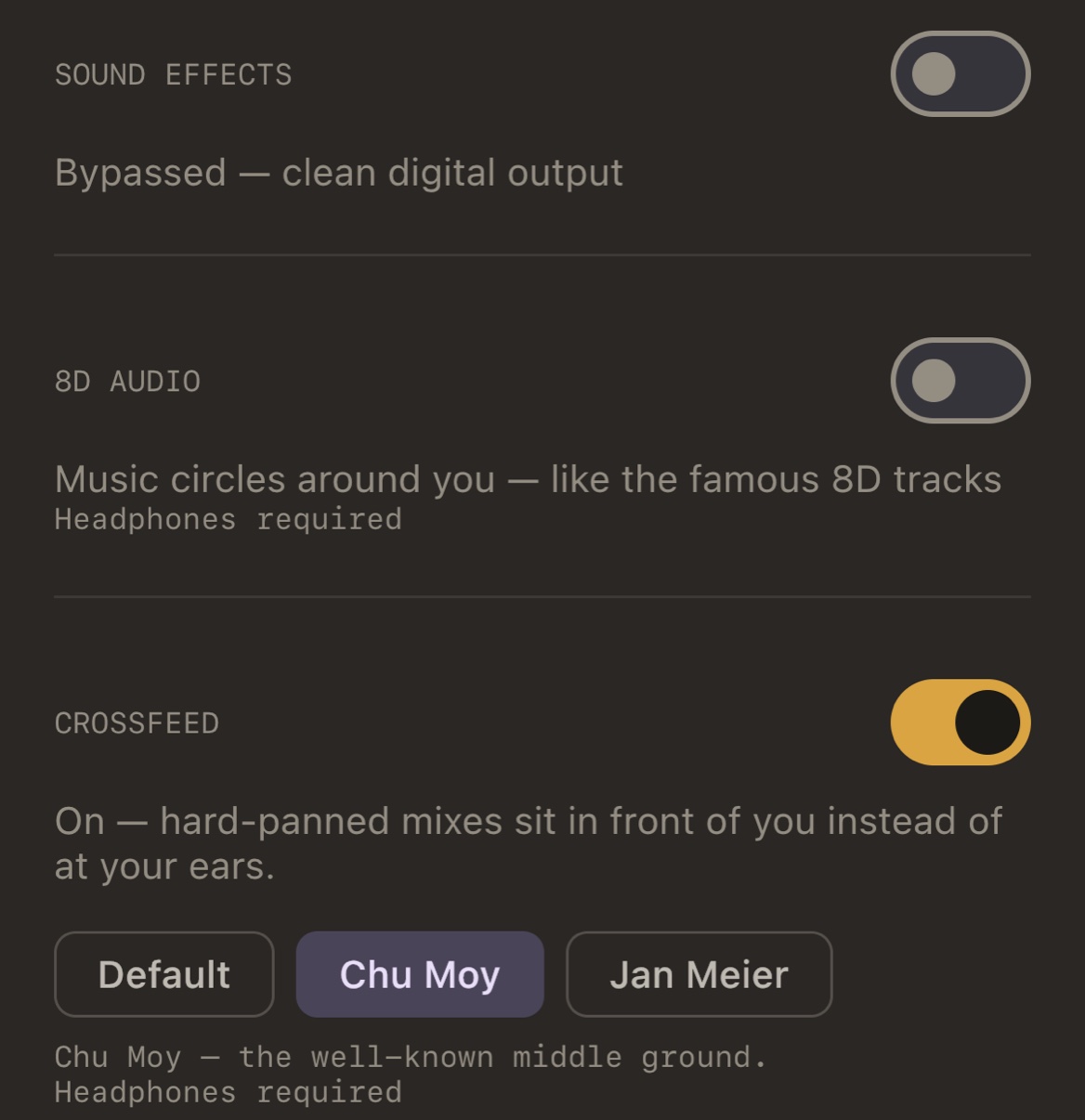
Learn moreHard-panned mixes were made for speakers. On headphones a guitar that is only in the left channel sits inside your left ear.
Learn moreSACD rips and DSD downloads usually need a specialist app. MP95 plays them in the same library as your FLAC, with their tags and artwork, and says exactly what it does with them.
Learn moreFLAC to DSD, APE to Opus, WMA to TrueHD. One page per format, with how each platform plays it.
Learn moreHeadphones
Three presets, flat in the centre, free on every platform. Hard-panned stereo stops sitting inside your ears. How it works.
DSD on a phone
DSF and DFF in the same library as your FLAC, converted to PCM and streamed: up to 352.8 kHz on iPhone and Mac, 88.2 kHz on Android. DSD in MP95.
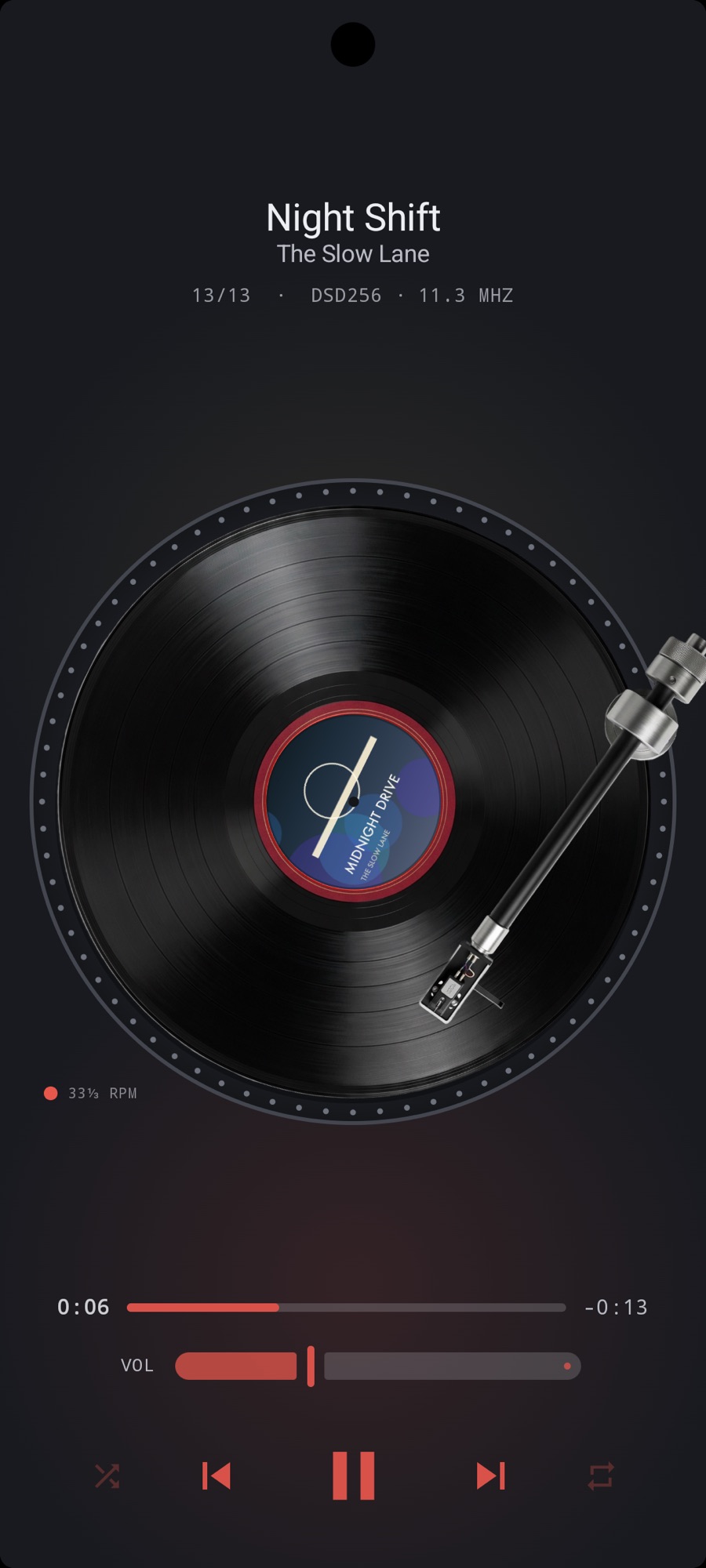
Both, and they do not get in each other’s way. The machines’ analog colour is one switch; with it bypassed, the path is clean and the Output line says bit-perfect.
Decoding and processing are 32-bit float on every platform. iPhone, iPad and Android hand 32-bit float to the system. The Mac’s output line is 24-bit, which carries every 16- and 24-bit source exactly.
All of them: the clean path, rate matching, gapless, ReplayGain and crossfeed are free on every platform.
Free on Android. Free to start on iPhone, iPad and Mac.